Plastic surgery in Korea reshapes tissue such as eyelid skin, nasal cartilage, facial bone or body fat through incisions or buried sutures, and most international patients have it done in Seoul clinics with their own operating rooms. A typical operating day starts with a final consultation and marking, moves to local anesthesia with sedation or to general anesthesia, and ends with a few hours of monitored recovery. Eyelid operations usually take one to two hours; bone and lifting work takes longer. Stitches often come out on day five to seven, and most visitors fly after one to two weeks once cleared. Clinics quote per operation, and this page compares clinics and their listed fees.
Clinics in Seoul
6 clinics for Plastic surgery in Seoul
If you are comparing Plastic surgery in Seoul, these 6 clinics are on this page: ENTER Plastic Surgery, Rewind Plastic Surgery, Garnet Plastic Surgery, JN Plastic Surgery, Girin Plastic Surgery and OPERA PLASTIC SURGERY. Their published Plastic surgery prices start at ₩1,200,000 before VAT.
 1
1. ENTER Plastic Surgery
Gangnam skin and lifting clinic with a facelift surgeon
- Skin plus surgery
- English & Japanese staff
- Station-front
ENTER Plastic Surgery, a plastic surgery clinic in Gangnam-daero, lists Plastic surgery among its main treatments; thread lifts, facelift surgery and HIFU lifting are also on its menu. Two floors (9F–10F) on Gangnam-daero, with hyperbaric oxygen, LED and IV drip recovery care in the same building.
- Board-certified plastic surgeons on staff
- Botox, skin boosters and device lifting sit alongside eyelid and facelift surgery in one clinic.
- English- and Japanese-speaking staff, with WhatsApp booking before you travel.
- One minute from Nonhyeon Station Exit 4 on the Sinbundang Line, on Gangnam-daero.
- Botox with a surgical option nearby
- Japanese-speaking visitors
- Location
- Gangnam-daero
- Listed price
- From ₩1,300,000 + VAT
 2
2. Rewind Plastic Surgery
★ 5.054 Google reviewsApgujeong lifting surgery clinic with a skin-care side
- Surgical lifting
- Same surgeon throughout
- Calm, private floors
Rewind Plastic Surgery, a plastic surgery clinic in Nonhyeon-ro, lists Plastic surgery among its main treatments; HIFU lifting, RF lifting and Botox are also on its menu. Two appointment-only floors above Nonhyeon-ro, laid out for calm and privacy, with a waiting lounge.
- Board-certified plastic surgeons on staff
- Menu centres on facelift, neck lift, double-chin liposuction and eyelid surgery.
- The same surgeon carries each case from first consultation to final follow-up.
- Botox, Ultherapy Prime, Thermage FLX, Rejuran and Juvelook are offered, planned separately from surgery.
- Visitors weighing surgical vs device lifting
- Jawline and neck concerns
- Location
- Nonhyeon-ro
- Languages
- English · Español
- Listed price
- From ₩1,200,000 + VAT
 3
3. Garnet Plastic Surgery
Apgujeong surgeon-led clinic for eyes, nose and facelifts
- Surgeon-led care
- Eyes, nose & lifting
- Small, calm schedule
Garnet Plastic Surgery is a plastic surgery clinic near Apgujeong Station. Plastic surgery is one of its main treatments, alongside facelift surgery and thread lifts. A fifth-floor clinic in Apgujeong's ISA Building, five minutes from Apgujeong Station.
- Board-certified plastic surgeons on staff
- The same surgeon meets you, operates and follows up, with no counsellor hand-off or substitute doctor.
- Known for registered technique names such as Quad Plus lower blepharoplasty and the Deep mini facelift.
- An English-speaking coordinator reviews your photos by WhatsApp, LINE or email before you book flights.
- Eyelid and under-eye surgery
- Revision or implant-free rhinoplasty
- Location
- Apgujeong Station (Line 3), ~4 min walk (294 m)
- Languages
- English
- Listed price
- From ₩2,000,000 + VAT
 4
4. JN Plastic Surgery
Eye, nose, lifting and body filler surgery in Gangnam
- Plastic surgery
- Thread lifting
- Revision care
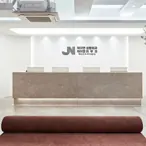
At JN Plastic Surgery near Gangnam Station, Plastic surgery sits with HIFU lifting, RF lifting and Botox among the treatments it focuses on. A 3rd-floor clinic on Gangnam-daero in Yeoksam-dong; the site shows interior photos but describes little of the space.
- Board-certified plastic surgeons on staff
- Signature 4-way thread lift is designed to pull, fill, tidy and firm by area.
- Separate centers for first-time surgery, revision surgery and anti-aging facelifts.
- Thread lifting and jawline
- Eye and nose surgery
- Location
- Gangnam Station (Line 2 / Sinbundang Line), about 5 minutes on foot
- Languages
- 中文
 5
5. Girin Plastic Surgery
★ 4.92,932 Google reviewsFull-scope plastic surgery with international recovery support
- Full-scope surgery
- Recovery program
- Two-floor setup
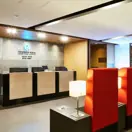
Girin Plastic Surgery, a plastic surgery clinic near Sinnonhyeon Station, lists Plastic surgery among its main treatments; HIFU lifting, RF lifting and Botox are also on its menu. Occupies Seocho W Tower.
- Covers eye, nose, facial contouring, breast and body surgery alongside dermatology.
- Recovery program adds post-surgery IV therapy and hyperbaric oxygen sessions for international patients.
- Facial contouring and rhinoplasty
- Solo international travelers
- Location
- Sinnonhyeon Station Exit 7, 2 min walk (Gangnam Station Exit 10, 5 min walk)
- Languages
- English · 中文 · 日本語 · ไทย
 6
6. OPERA PLASTIC SURGERY
★ 4.6127 Google reviewsGangnam plastic surgery clinic for contouring and breast surgery
On the 7th floor of the Brand Building on Gangnam-daero; the site has an 'Inside Opera' photo tour of the facility.
- Location
- Nonhyeon Station (Line 7) Exit 4, 1 min walk
- Languages
- English · 中文
Prices
Plastic surgery cost in Seoul
Prices below come from the listed clinics' own price lists, before VAT. 10% VAT is added at payment.
Non-incisional (buried) double eyelid
Price at 1 listed clinic · approx. $873₩1,200,000 + VATCompare clinicsMedial epicanthoplasty
Price at 1 listed clinic · approx. $873₩1,200,000 + VATCompare clinicsLateral/lower/upper canthoplasty
Price at 1 listed clinic · approx. $873₩1,200,000 + VATCompare clinicsEpicanthoplasty — medial or upper (each)
Price at 1 listed clinic · approx. $945₩1,300,000 + VATCompare clinicsNon-incisional (buried suture) double eyelid
Price at 1 listed clinic · approx. $1,164₩1,600,000 + VATCompare clinicsPartial-incision double eyelid
Price at 1 listed clinic · approx. $1,309₩1,800,000 + VATCompare clinicsIncisional double eyelid surgery
Price at 1 listed clinic · approx. $1,455₩2,000,000 + VATCompare clinicsDouble eyelid — buried (non-incisional)
Price at 1 listed clinic · approx. $1,455From ₩2,000,000 + VATCompare clinicsIs it for you?
Who Plastic surgery in Seoul suits, and who should wait
Surgery suits healthy adults with a specific structural concern: hooded or heavy upper lids, a nasal bridge or tip they want changed, a prominent jaw angle, or skin and fat that non-surgical treatments cannot shift. Well-prepared candidates arrive with realistic goals, a medical history in writing and enough days to heal before flying.
It is not a fit for someone hoping to look like another person, who cannot stop smoking or pause blood thinners, or who has only a long weekend. Surgery does nothing for fine lines, pigment or pore texture, and it will not stop the face from aging.
Usually a good fit
- A clear structural concern you can point to
- Stable weight and general health
- Able to stay one to two weeks
- Willing to stop smoking before and after
May be better to wait
- Pregnant or breastfeeding
- Infection or active skin disease on the area
- Old implants or filler in the zone not yet imaged
- A problem that needs medical or psychological care first
How it works
How a Plastic surgery session runs
Every operation combines three decisions: how to anesthetize, where to enter the tissue and how to hold the new shape while it heals. Surgeons in Korea use buried sutures for some eyelid folds, incisions hidden in natural creases or inside the nose for most reshaping, and screws, plates or bone cuts for facial contouring. Fixation matters because tissue keeps moving after surgery. In a 2022 case series in the Journal of Plastic, Reconstructive and Aesthetic Surgery, Shi and colleagues described a buried-suture method that joins three tissue layers; of 873 patients, the 563 followed for more than six months kept their folds, and 94% of the full group reported satisfaction.
Sutures also carry their own risks. Wang and colleagues reported in the same journal in 2021 on 12 patients whose eyes were injured by suture material after buried-suture eyelid surgery, from corneal scratches to one perforating injury; removing exposed thread ends repaired most corneal damage. Where to make the incision changes outcomes too: in a 2022 series of 67 patients, Qiu and colleagues removed lax skin and deep fat through a cut under the eyebrow, with two cases of brief numbness and two of slight brow asymmetry, none needing reoperation.
Where South Korea and plastic surgery meet your budget, clinics charge per operation; anesthesia type, graft source and number of areas set the quote.
Final consultation and marking
The surgeon re-examines you, draws incision lines and confirms the plan; ask every question before signing consent.
Pre-operative checks
Blood tests, an ECG and, for bone work, a CT scan are reviewed. You fast for about eight hours if sedation or general anesthesia is planned.
Anesthesia
Local anesthetic is injected into the area, often with intravenous sedation; longer operations use general anesthesia with breathing support and continuous monitoring.
The operation
Tissue is reshaped and fixed with sutures, grafts or plates; this takes about one hour for many eyelid cases and three to five hours for jaw or combined work.
Monitored recovery
You rest one to several hours while nurses check bleeding, pain and vital signs; some bone or body operations include an overnight stay.
Plastic surgery compared with other options
| Local anesthesia | Local with IV sedation | General anesthesia | |
|---|---|---|---|
| How it feels | Awake, area numb, pressure felt | Drowsy, little memory of the operation | Fully asleep |
| Typical use | Small excisions, minor revisions | Eyelid and many nose operations | Jaw, cheekbone, facelift, breast and body |
| Fasting | Usually none | About eight hours | About eight hours |
| Monitoring | Pulse and oxygen | Pulse, oxygen, blood pressure | Full monitoring with airway support |
| Back at lodging | Within an hour or two | After a few hours of recovery | Same evening or the next day |
At a glance
Plastic surgery facts
| Procedure type | Incisional, buried-suture and bone-contouring surgery |
|---|---|
| Common areas | Eyelids, nose, jaw and cheekbones, face and neck, breast and body |
| Anesthesia | Local, local with sedation, or general, depending on the operation |
| Operation length | About one hour for small eyelid work to five hours for bone work |
| Stitch removal | Usually day five to seven |
| Main visible swelling | One to three weeks |
| Earliest flight home | Commonly 7 to 14 days, after a final check |
| Settled result | Three to twelve months; nose and jaw take longest |
| Fee unit | Per operation package, listed before VAT |
Recovery
What the days after look like
Numbness fades into tightness and aching. Sleep with the head raised and use cold packs as instructed.
Swelling and bruising peak. Take prescribed medicines, walk gently every few hours and avoid alcohol.
Stitches, splints or drains are removed and bruising yellows. Short outings in a mask and sunglasses are usually comfortable.
Daily life returns, though the area feels firm or numb. Exercise, saunas and swimming resume only once cleared.
Scars soften and residual swelling settles. Final shape, and any need for revision, is judged in this period.
Safety
Plastic surgery risks and limits
- Swelling, bruising, aching and temporary numbness are expected
- Bleeding under the skin, infection or slow wound healing may need treatment
- Exposed or loosened sutures can irritate or injure the eye after eyelid work
- Asymmetry, visible scars or graft and implant problems can require revision
- Nerve injury, anesthesia reactions and leg clots after flying are rare but serious
- Surgery changes structure but does not stop aging or improve skin quality
Evidence
Research behind this page
- Cause and Management of Suture-related Ocular Complications after Buried-suture Double-eyelid BlepharoplastyJournal of Plastic, Reconstructive & Aesthetic Surgery · 2021 · Wang Y, Zhang Y, Tian N · doi:10.1016/j.bjps.2021.05.042
Described 12 patients with corneal and other eye injuries from suture material after buried-suture eyelid surgery and showed that removing exposed thread ends repaired most corneal damage.
- Orbicularis–levator–tarsus fixation suturing in buried suture double-eyelid blepharoplastyJournal of Plastic, Reconstructive & Aesthetic Surgery · 2022 · Shi J, Zhang J, Gu C, Chen W, Yang M · doi:10.1016/j.bjps.2021.11.012
In 873 Asian patients, a suture fixing three tissue layers kept the fold in all 563 followed beyond six months, and 94% of patients were satisfied.
- Sub-brow skin excision Combined with retro-orbicularis fat resection: A Technique for upper eyelid bulkiness and laxity correctionJournal of Plastic, Reconstructive & Aesthetic Surgery · 2022 · Qiu Y, Shen Y, He J, Zhou X, Jin R, Lu L · doi:10.1016/j.bjps.2021.11.059
In 67 patients, removing lax skin and deep fat through a sub-brow incision reduced upper lid bulk, with two cases of brief numbness and two of slight brow asymmetry.
FAQ
Questions about Plastic surgery in Seoul
Which clinics offer Plastic surgery in Seoul?
Clinics offering Plastic surgery in Seoul include ENTER Plastic Surgery (Gangnam-daero), Rewind Plastic Surgery (Nonhyeon-ro), Garnet Plastic Surgery (Apgujeong Station), JN Plastic Surgery (Gangnam Station) and Girin Plastic Surgery (Sinnonhyeon Station). Each lists Plastic surgery on its own menu; message the clinic directly to confirm the doctor, product and current price.
Who gives the anesthesia during plastic surgery in South Korea?
For sedation or general anesthesia, ask whether a dedicated anesthesiologist is present for the whole operation rather than the operating surgeon managing it alone. At a plastic surgery clinic in Korea, larger practices usually employ anesthesiologists, while smaller ones may bring one in on surgery days. The person giving anesthesia should review your history and medicines beforehand. Ask how oxygen, heart rhythm and blood pressure are monitored and what emergency equipment is in the room.
Can I ask for my operation to be recorded?
Yes, Korean law requires operating rooms where patients are under general anesthesia or otherwise unconscious to have cameras, and patients can request recording. The request is usually made in writing before surgery, and the footage is kept for a set period. Recording does not replace checking who operates, but it adds a record. Ask the clinic how to request it and how to view the footage if needed.
Are the stitches dissolvable or removed?
Both are used, depending on the area: skin stitches on the face are usually removed around day five to seven, while deeper stitches dissolve on their own. Buried sutures that hold an eyelid fold are often permanent and stay in place. Ask which kind you will have and when removal is scheduled, since it decides your earliest safe flight date. Keep the area clean and dry until then.
Why do surgeons ask me to stop smoking before surgery?
Smoking narrows small blood vessels, which slows wound healing and raises the chance of infection, skin loss and wider scars. Surgeons commonly ask patients to stop for several weeks before and after surgery, including vaping and nicotine patches. The effect matters most for lifting and other operations that move skin over long distances. Tell the surgeon honestly how much you smoke so the plan can be adjusted.
Which medicines and supplements should I pause?
Blood-thinning medicines and some supplements raise bleeding risk and often need to stop before surgery, but only with the prescribing doctor's agreement. Aspirin, some anti-inflammatory painkillers, fish oil, vitamin E and certain herbal products are common examples. Send a full list to the clinic weeks ahead. Never stop a medicine prescribed for the heart or for clots without checking with the doctor who prescribed it.
What makes South Korea for plastic surgery practical for a short trip?
Clinics in Seoul usually handle consultation, tests and the operation within a few days, so a stay of one to two weeks often covers surgery and stitch removal. Many have staff used to international patients and English paperwork. That speed is useful but not essential; never compress a stay so far that you board a flight before your surgeon has cleared you.
Will there be drains or a compression garment?
Drains are sometimes placed after facelifts, jaw or body operations to collect fluid, and they are typically removed within a few days. Compression garments or face bands are common after liposuction and contouring, and a splint protects the nose after reshaping. Ask how long each must be worn and how to wash or change them. Pack loose front-opening clothes that slip on easily over dressings.
When can a revision be considered if I am unhappy?
Most surgeons wait at least three to six months, and often longer for the nose, before judging whether revision is needed. Early swelling distorts shape, and operating too soon on inflamed tissue raises the risk of a worse result. Ask the clinic before surgery what its revision policy covers. Keep photos from each follow-up so changes can be compared accurately.
Is it safe to fly home soon after general anesthesia?
Flying is usually possible once the surgeon clears you, but long flights soon after general anesthesia raise the risk of blood clots in the legs. Walking, drinking water, compression stockings and aisle seats lower that risk. Swelling can also increase with cabin pressure. Follow the surgeon's advice on the earliest flight date rather than booking before the operation. Plan a buffer day.
How long do results of surgery last?
Structural changes such as bone contouring and reshaped cartilage are long lasting, but the surrounding skin and soft tissue continue to age. Suture-based eyelid folds can loosen over the years, and lifted skin gradually relaxes. Results vary from person to person. Protecting scars from sun, keeping a stable weight and not smoking all help preserve what the operation achieved. Expect gradual change.